 01
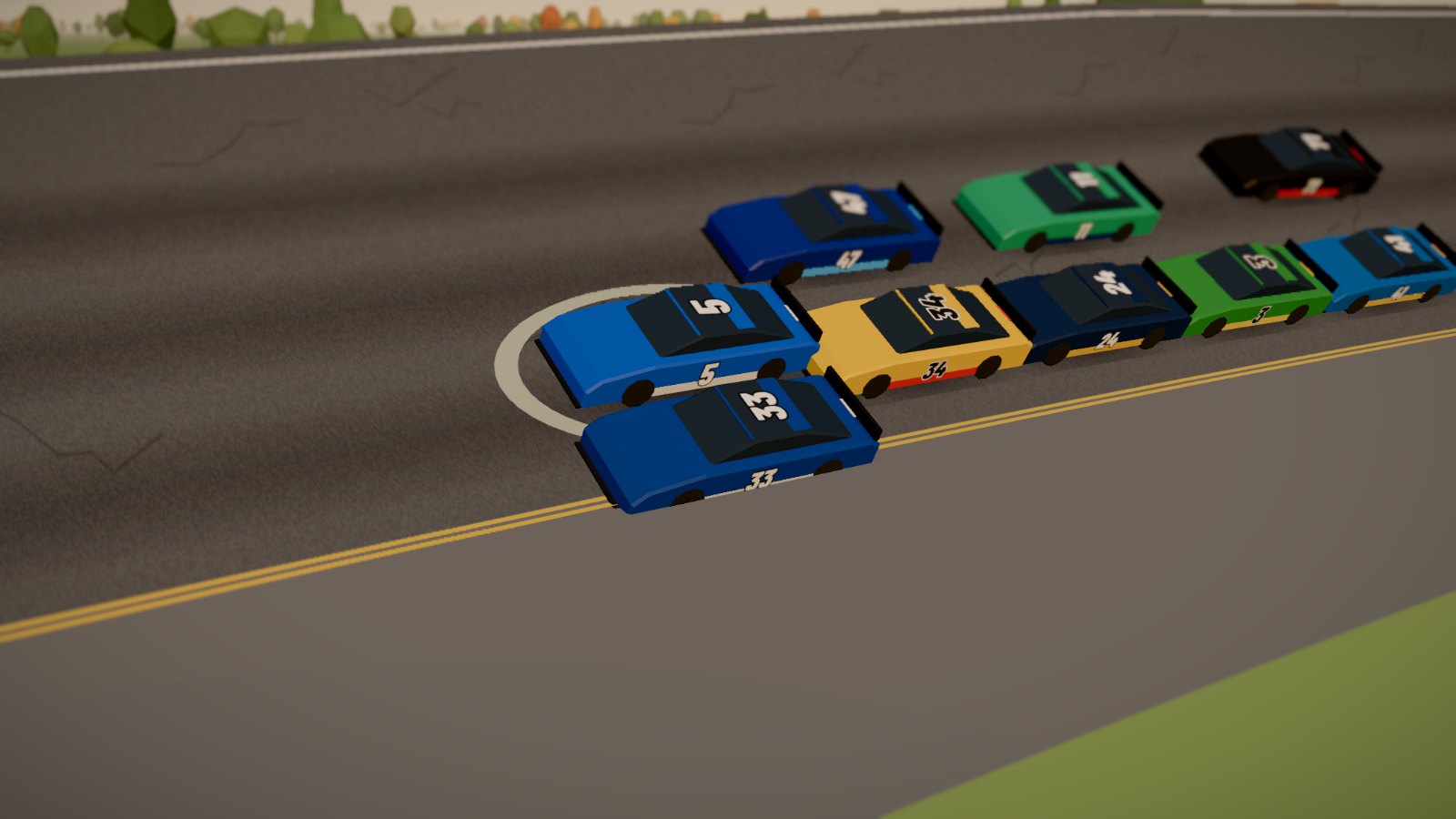
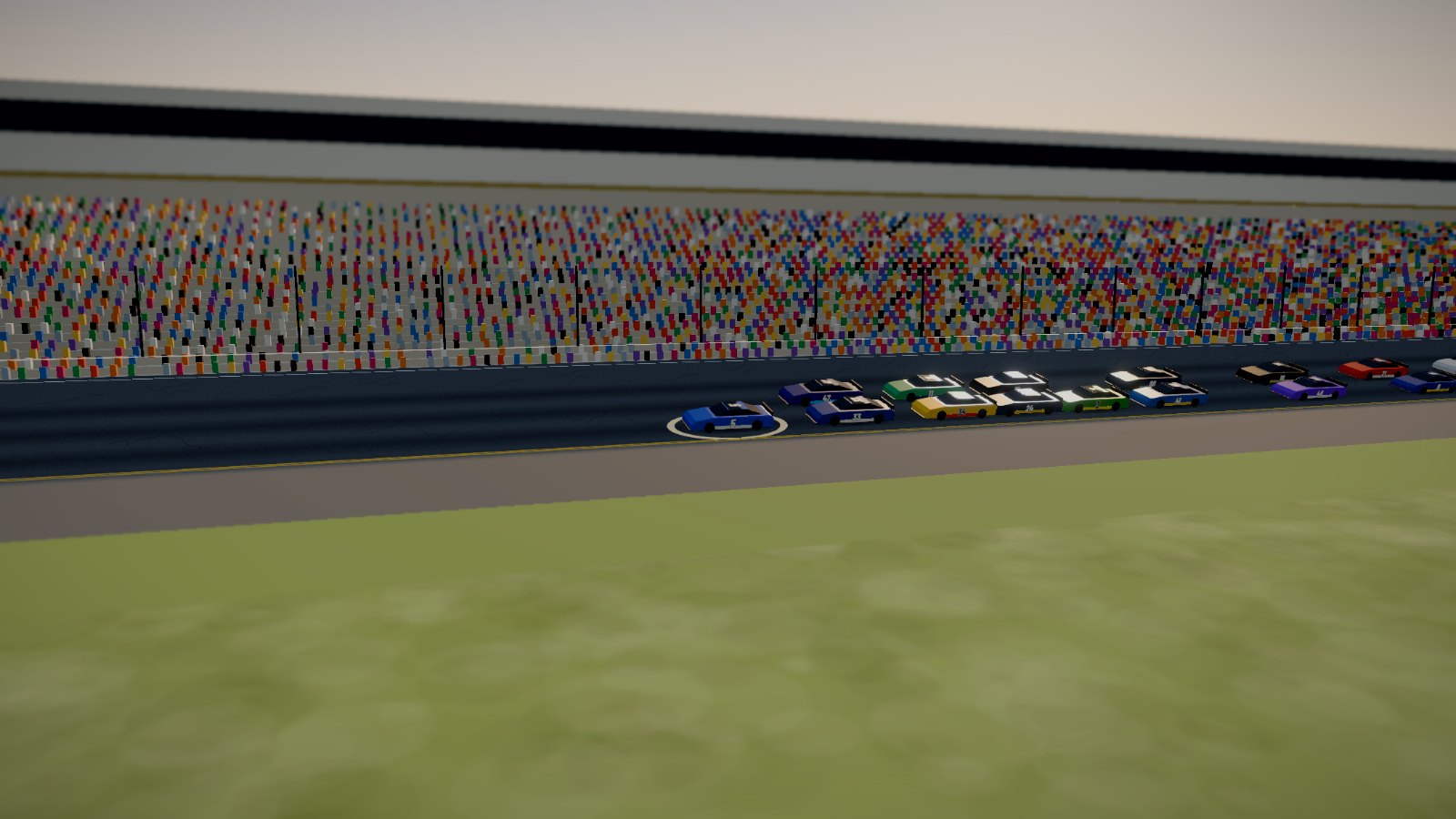
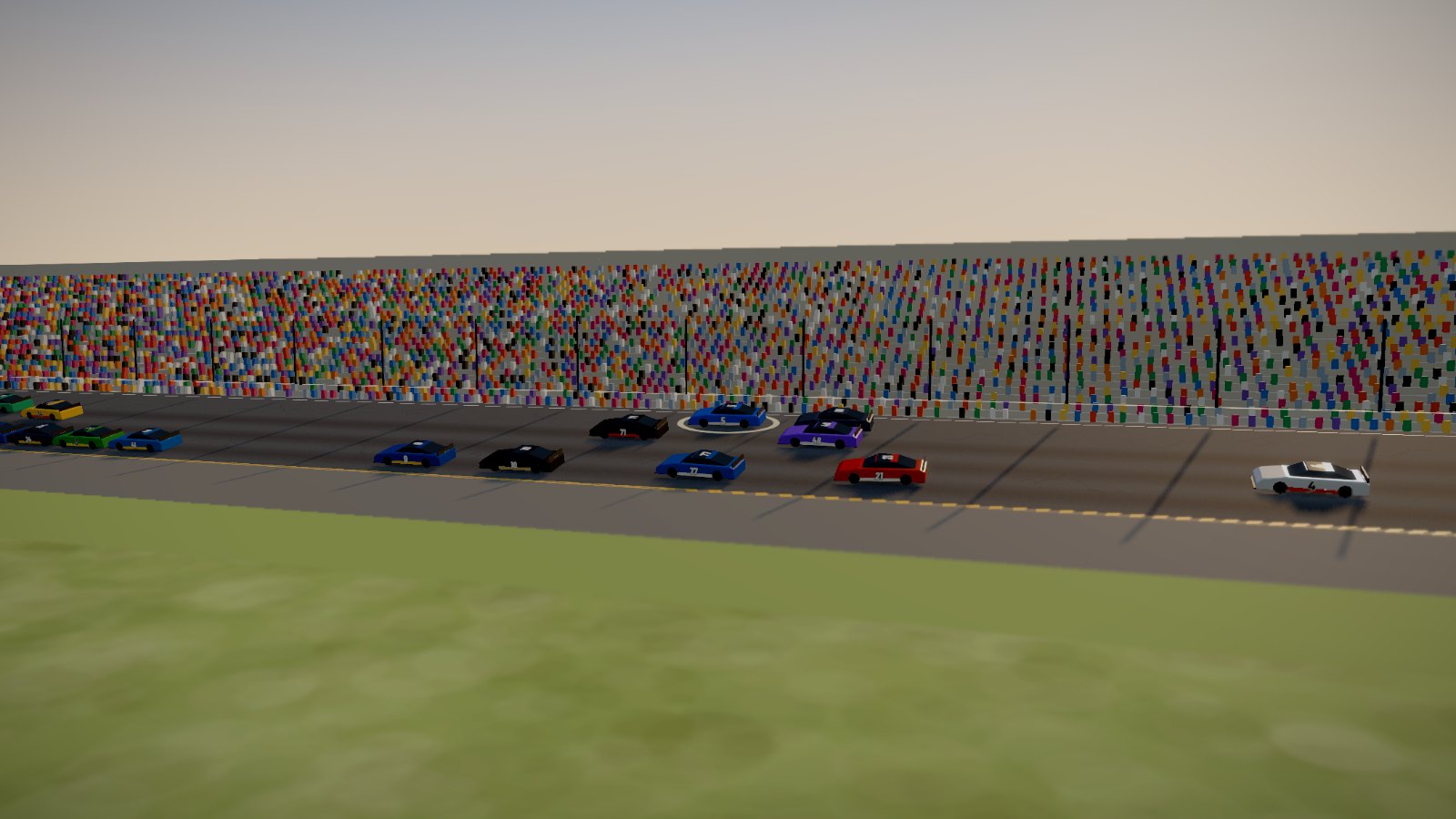
The level opens with the finish as it was on TV. Skip it if you know it by heart.
 02
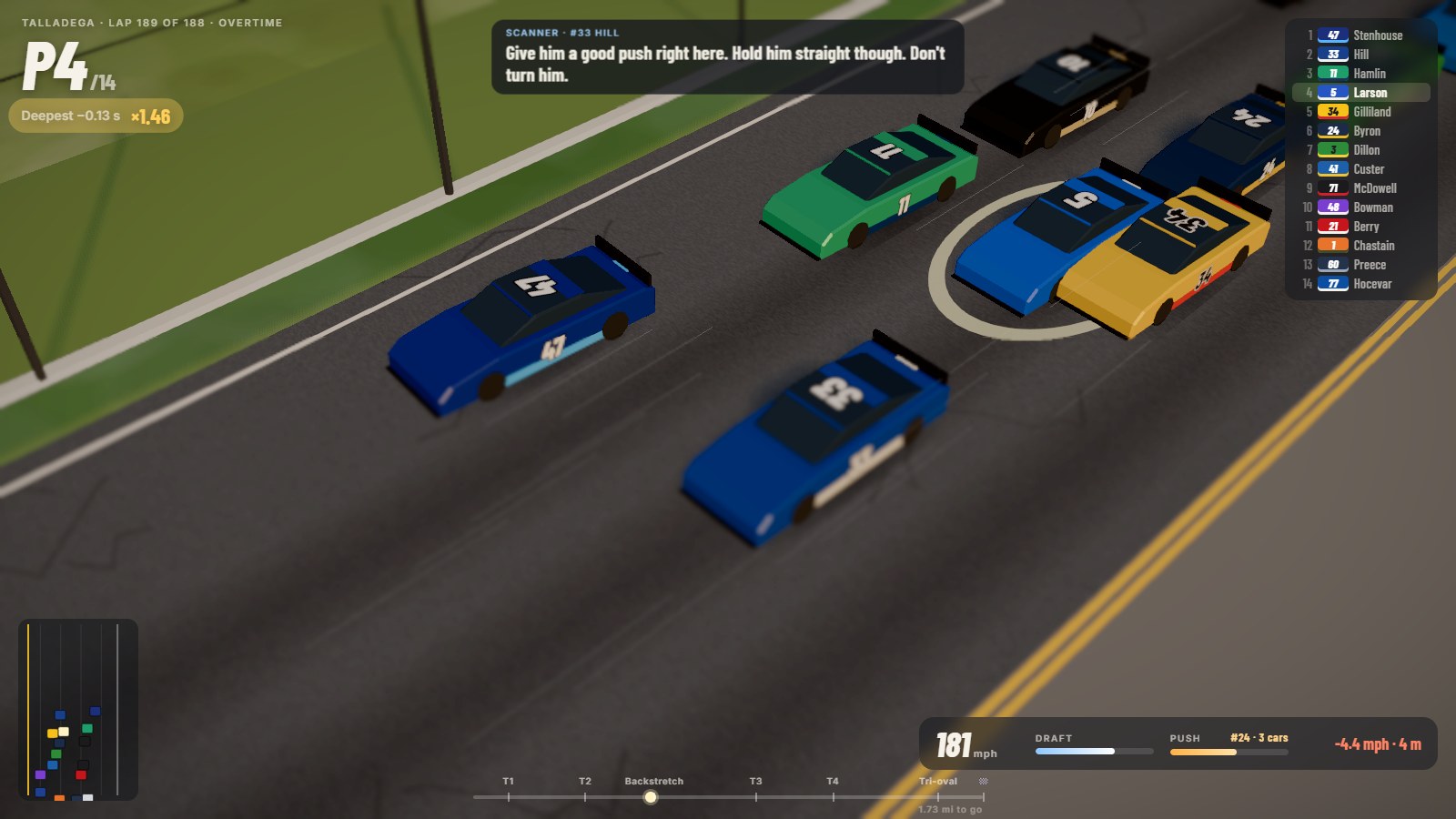
Same cars, same lanes, same gaps as the real thing at the white flag. Drop back, find a push, time your run — and stay above the yellow line.
 03
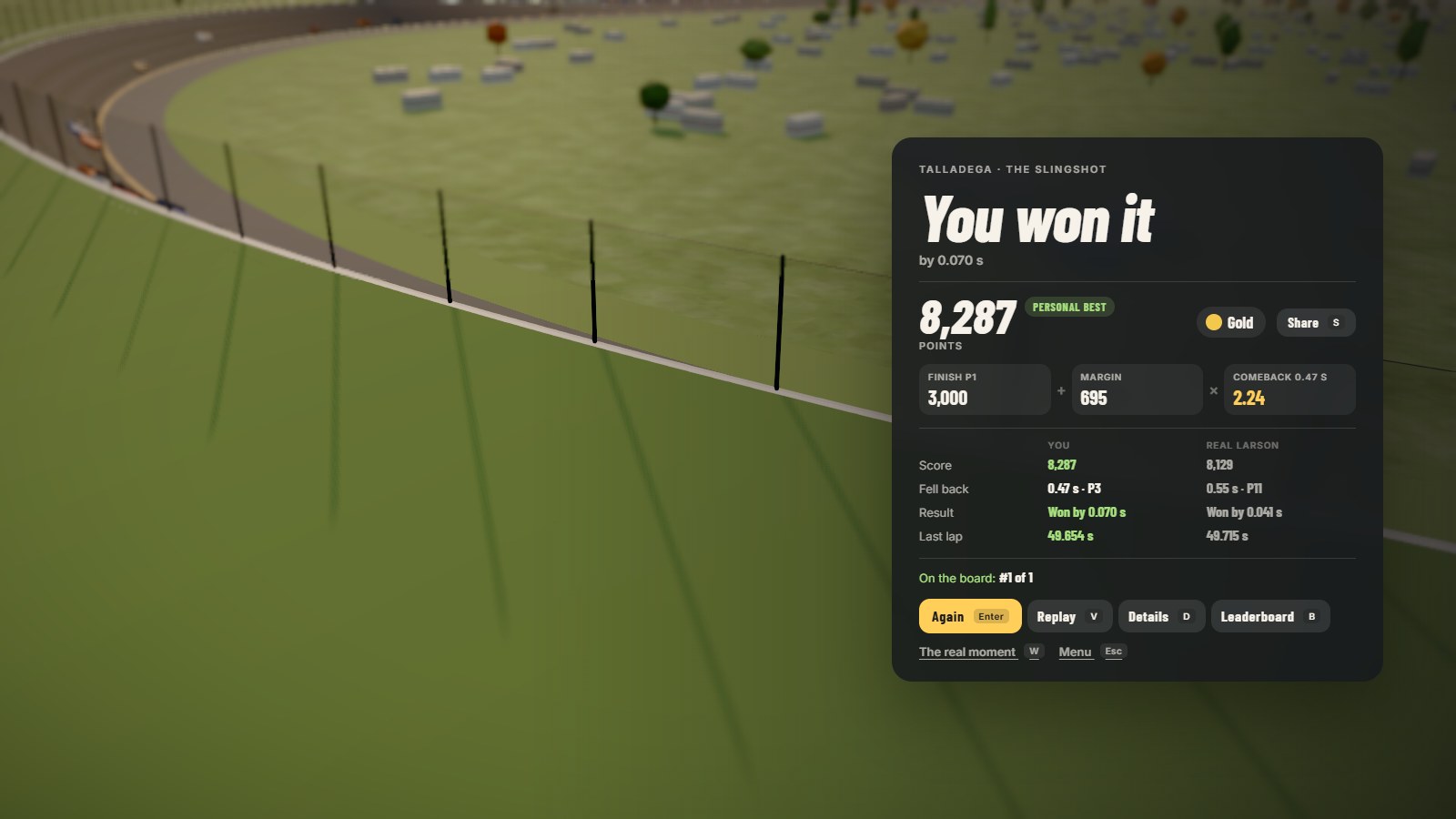
Win it by more, or win it from further back. The real run is the score to beat — and the further you fall before you come back, the more it’s worth.
Your result is multiplied by how far behind the leader you fall before you come back. Drop back to build a bigger run — but you still have to get to the front. Every millisecond of the winning margin counts.
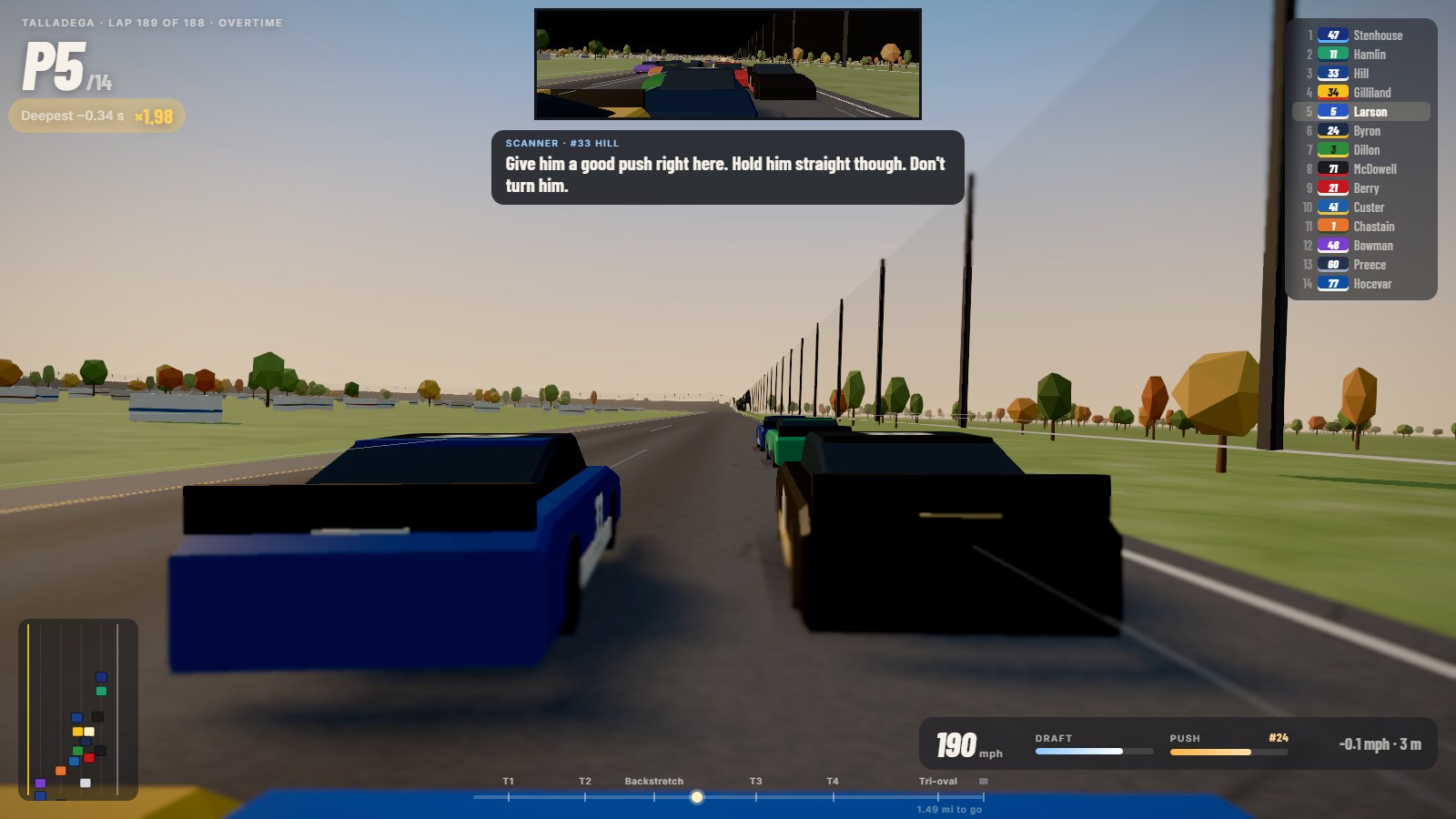
Spotters, crew chiefs and the broadcast booth, each clip tied to the moment it really happened — "keep helping the 5" plays when Chastain is on your bumper, not at random.
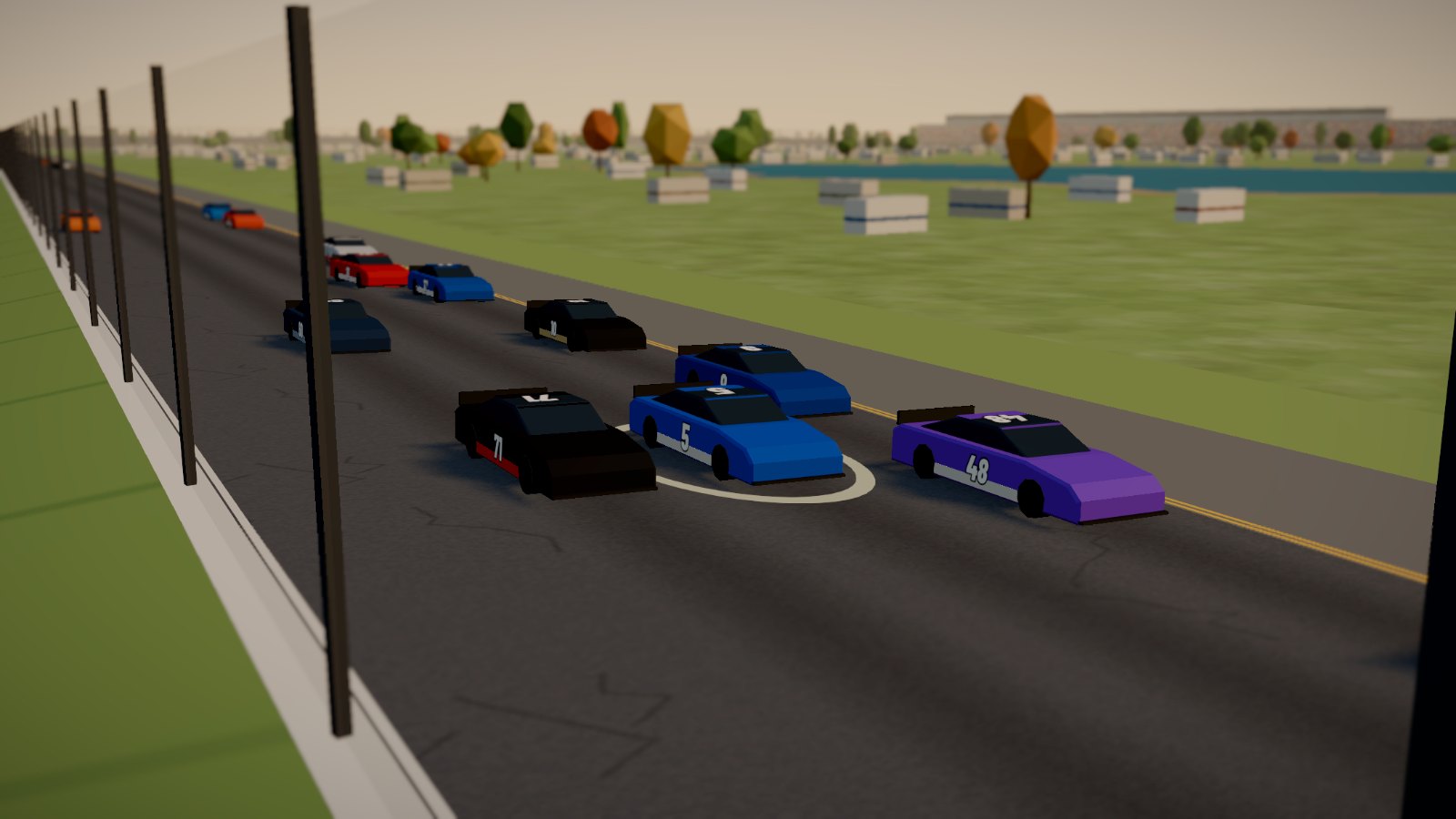
Drafting, pushing, side-drafts and lane changes. Some drivers push you, some never will — just like Sunday. Chastain always does, and his push is the strongest in the field.
Hill pushes you from the white flag — then, in turn 2, dives below the yellow line, unless you block him. In the real race the 5 dropped to 11th. What do you do?
We went deep on the pack AI, tuning it against three goals that pull in different directions. What really happened: the field has to be able to finish the way it did on Sunday. How drivers really race: drafting partners, blocks, lanes that ebb and flow instead of trains on rails, and nobody hitting the brakes just because you pulled out of line. What makes it fun: a push that carries its momentum, a pack that fans out so there's a run to find, and crashes that stay rare. Every change was measured over hundreds of laps run without graphics before it went in.
Where every car was at the white flag comes from NASCAR's official timing: each car's elapsed time minus its last lap. The lanes are read off the broadcast at that instant.
Every car rides the air of the cars ahead: the draft, the push, the side-draft, the air in front of a pusher. Who pushes whom follows the real politics — Chastain always pushes Larson.
What really happened is scripted in — Hill diving under the 5 in turn 2, Stenhouse's run on the outside — and from there the race is yours to change.
The simulation runs at a fixed 120 steps a second from a seed, so a run is just its seed and your inputs: a few kilobytes that replay exactly, from any camera.
The server plays every submitted run back with the same simulation before it counts. The leaderboard only holds laps that really happened.
Before the level shipped, thousands of laps ran without graphics to check that the field finishes the way it really did, and that it doesn't wreck when it shouldn't.
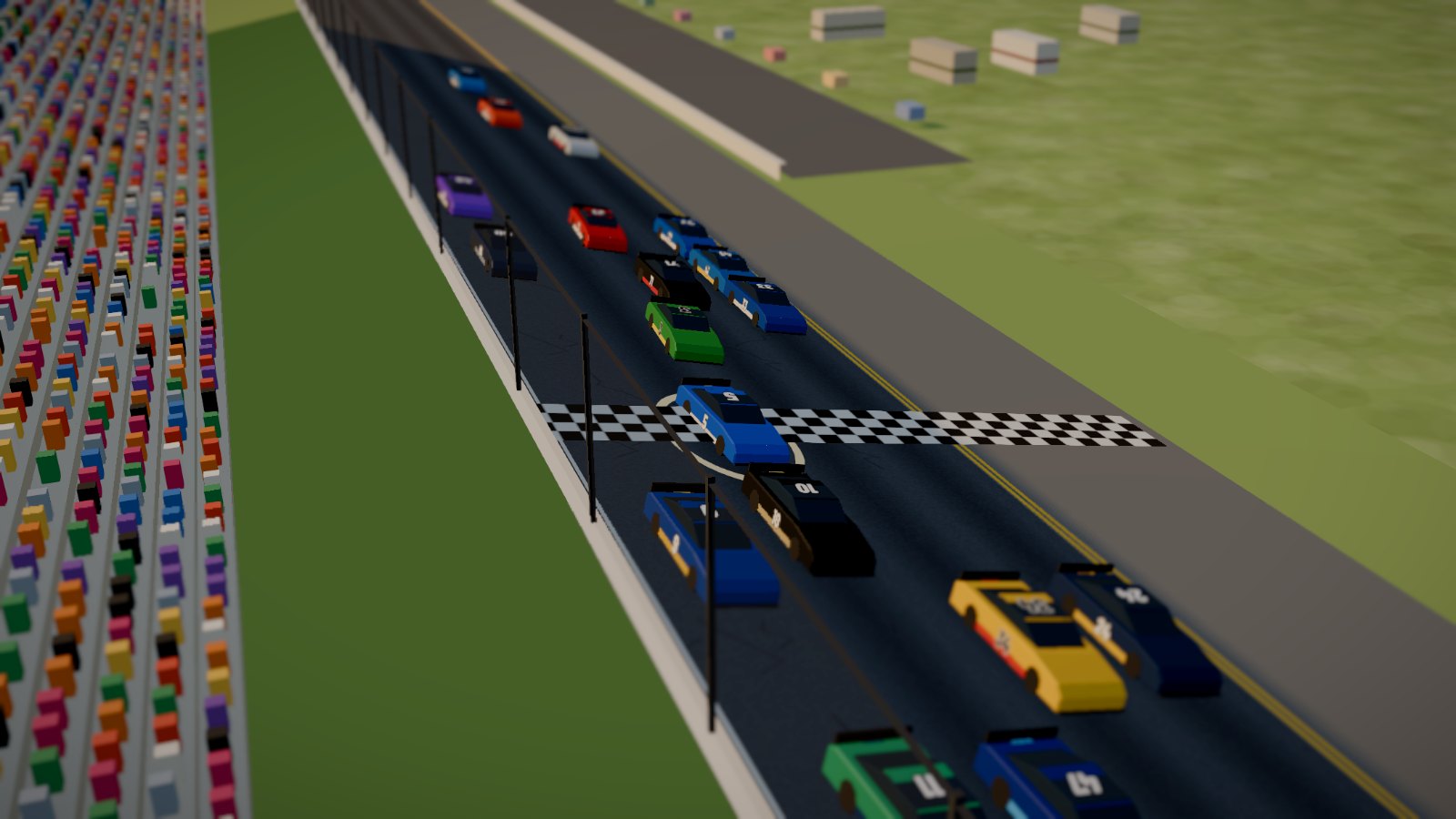
Lines, pushes, records — and how far back you dared to fall. Post your best run.